
Back to Articles
As Logistics Bottlenecks Shift Upstream, the Solution Lies in Faster Decision-Making
Share
Link Copied

Link Copied

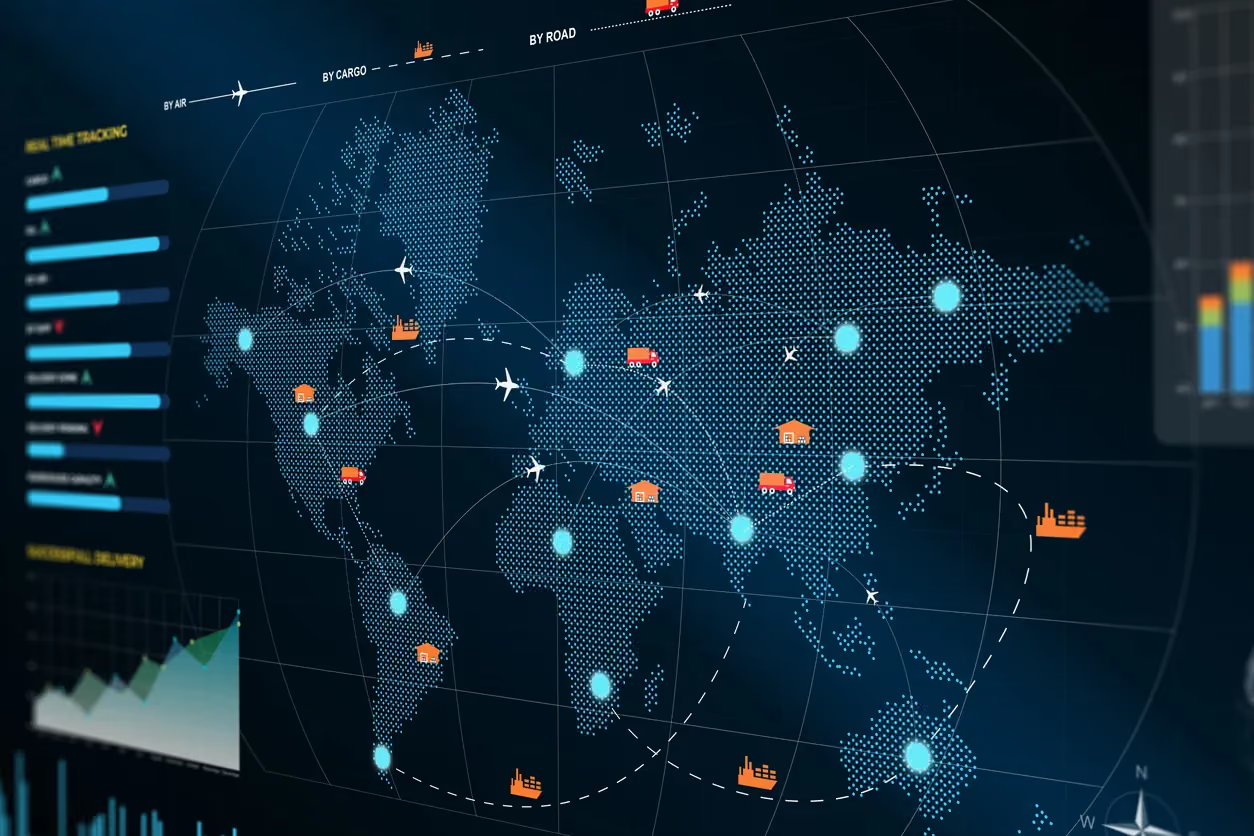
While the logistics industry is becoming accustomed to blocked ports and congested trade lanes, pressure is now shifting upstream. From the availability of raw materials and strategic components to constraints on manufacturing capacity, these factors are fundamentally changing where supply chain bottlenecks occur.
To avoid operational disruption, supply chain leaders need to be able to identify and respond to these potential constraints quickly. This demands flexibility to adapt to sudden change and greater visibility to support informed decision-making. APL Logistics looks at how supply chain leaders can adapt to these shifts, with insights shared by Mr. Waldo Basilla, APL Logistics’ Chief Operations and Commercial Officer, Asia.
Understanding the Impacts of Upstream Constraint Shifts
Interruptions to material flow can be surprisingly insidious. A constraint on even the least considered input can quickly cascade into throttled production across a wide variety of goods. This, in turn, can constrain production and create further pressure on the flow of goods through logistics channels increasingly affected by fluctuations in capacity and transit availability.
It’s now essential that businesses understand where their most strategic inputs originate, how they move, and which sources may be vulnerable to disruption. This has become particularly important as supply chains expand to include a variety of sourcing areas.
The challenge is spotting these risks early enough to act. By turning to analytics sources such as material indices, transportation capacity, carrier behavior, and forward-looking freight data, supply chain leaders can often identify signals and choke points indicating that lead times or availability may be deteriorating—before the impact reaches their supply chain and customers.
This end-to-end visibility is critical, but it isn’t the answer on its own. As Basilla put it, “Visibility that allows you to manage exceptions is what really creates value.”
The Power of Flexibility
That visibility helps businesses distinguish between genuinely temporary delays and developing structural constraints, so they understand when and where conditions have fundamentally shifted.
Forecasting and scenario modeling then give supply chain leaders greater flexibility in how they manage exceptions and adjust to developments, rather than treating every disruption as an isolated event with limited impacts.
Basilla highlights how predictive estimated times of arrival, for example, can be modeled against different scenarios to show the potential impacts of developing congestion or severe weather, allowing supply chain leaders to make contingency plans before cargo experiences significant delays.
This could mean deciding that cargo should move through a different route or freight option, or splitting orders so a priority portion arrives through a faster or more reliable option to ensure continuity. Businesses can decide on the optimal balance of availability, speed, and cost for each line.
Supporting Strategic Decisions
This can also offset the risk inherent in over-carrying buffer stock. By segmenting flows according to factors such as demand predictability, priority, or changing lead times, companies can hold buffer stock where it truly creates value and explore alternative solutions for less strategic lines.
It also allows businesses to triage strategic lines that need priority focus. Not every product or component is business-critical. Some can absorb the impact of delays, while others must arrive strictly on time for operational continuity. For these lines, using vendor-managed inventory or strategically positioning materials closer to where they will be needed frees businesses from relying on blanket buffers and allows them to adopt a more focused strategy.
This kind of flexible, informed decision-making is becoming increasingly important as more businesses look to diversify their sourcing and manufacturing footprints beyond China. As part of this evolution, businesses must also consider the infrastructure capacity of each new area. Associated trade costs and duties must be considered alongside operating costs and understood through total landed costs. Diversified supply chains only create greater resilience when they are both reliable and profitable. This requires logistics partners with local footprints and the infrastructure and technical capabilities to support new flows, from automation and facility productivity to analytics tools.
With the right visibility and forecasting, supply chains can anticipate bottlenecks and keep the right products moving with the least possible disruption. The goal is to use these tools to assess new sourcing options holistically and build segmented, flexible supply chains that balance resilience and service based on the products that matter most to their operations—without taking on undue risk. The businesses that make this shift now will be best placed to minimize or even avoid potential upstream bottlenecks, even in a turbulent logistics environment.
APL Logistics supports customers with forecasting and planning capabilities to help businesses better anticipate disruption and optimize supply flows, so you can always respond with confidence. Feel free to discuss your needs with our team today.
Disclaimer: This article is issued for general information purposes only. APL Logistics accepts no responsibility for any information contained within this article and disclaims and excludes any liability in respect of the contents or for action taken based on such information.
Back to Articles
Updates
Subscribe to The Pulse Newsletter
Get in Touch
Whether you have a question, need support, or want to learn more about our logistics solutions, fill out the form below and our team will get back to you as soon as possible.
We'll be in touch soon.

Your Partner for Connected, Integrated Solutions
APLL works with enterprises that manage complex supply chains, delivering custom solutions and reliable execution.