Back to Articles
Customer Advisory: Middle East Escalation – Severe and Ongoing Supply Chain Disruption
Share
Link Copied

Link Copied

March 5, 2026
Military escalation in the Middle East continues to generate severe, multi‑modal disruption across global supply chains. As of today, commercial maritime traffic through the Strait of Hormuz remains effectively halted, major container carriers have suspended transits and bookings to the Arabian Gulf, and airspace restrictions across multiple countries continue to constrain air‑cargo capacity. These conditions are driving extended transit times, material cost increases, and heightened operational risk across multiple trade lanes.
Customers with cargo originating in, transiting through, or dependent on Middle East gateways should plan for prolonged disruption and ongoing volatility.
Current Situation
Following confirmed attacks on commercial vessels and escalating military activity between February 28 and March 4, 2026, shipowners and insurers have broadly withdrawn coverage for transits through the Strait of Hormuz, leading to a near‑total suspension of tanker and container traffic through the waterway. Vessel‑tracking data shows hundreds of ships holding position in the Gulf of Oman and adjacent waters, with minimal commercial transits occurring under elevated risk conditions.
Major container carriers—including Maersk, MSC, Hapag‑Lloyd, and CMA CGM—have suspended Hormuz crossings, imposed booking stops, or declared end‑of‑voyage actions for Gulf‑destined cargo, citing crew safety and insurance constraints. Several carriers have implemented emergency freight increases and war‑risk surcharges effective immediately.
At the same time, Red Sea and Bab el‑Mandeb routings remain restricted due to renewed security threats, eliminating short‑haul alternatives and forcing widespread Cape of Good Hope diversions.
Implications for Supply Chain and Logistics
Ocean Freight
- The Strait of Hormuz—normally carrying roughly 20–27% of global oil and LNG volumes—is functionally closed to routine commercial traffic, disrupting both energy and containerized supply chains.
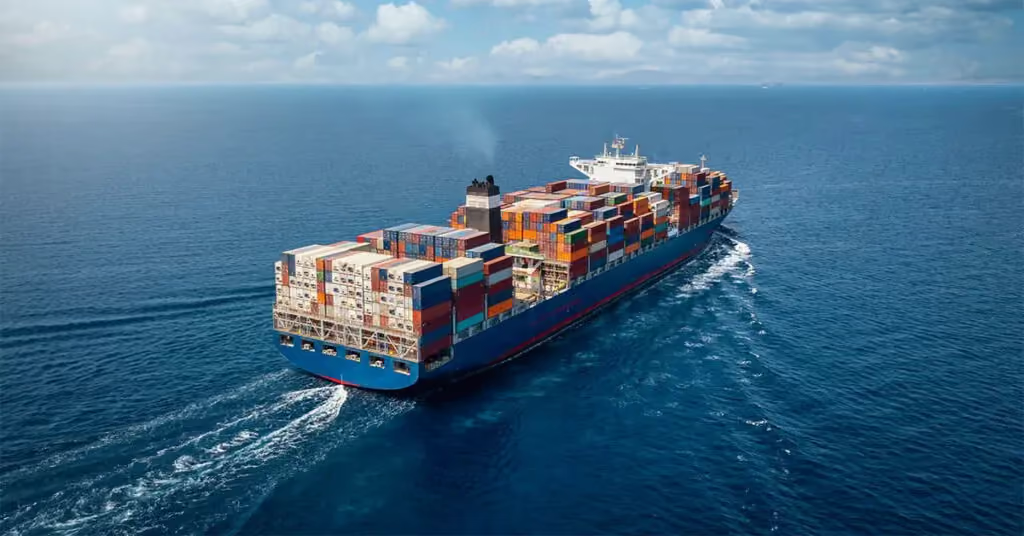
- Major liner services are rerouted around southern Africa, adding 10–14 days to Asia–Europe and Asia–U.S. East Coast voyages and tightening global vessel capacity.
- Emergency freight increases, war‑risk surcharges, and insurance‑driven cost escalations are now being applied across Gulf‑linked corridors. reportedly slowed or paused annual trans‑Pacific service contract negotiations as carriers assess how the conflict may affect their cost structures and the amount of functional capacity they can commit.
In addition, the marine insurance market is tightening coverage parameters for the region. London market insurers’ Joint War Committee has extended and amended multiple Middle East “listed areas,” which may increase voyage notification requirements and additional premiums for ships entering affected waters.
Carriers have also published new pricing actions to reflect higher operating costs. For example, Maersk has announced an Emergency Freight Increase for world to/from select Gulf destinations and noted that instability in the Strait of Hormuz is driving operational adjustments and cost impacts.
Air Cargo
- Widespread airspace closures and restrictions across Iran, Israel, Qatar, Bahrain, Kuwait, Iraq, and portions of the UAE continue to eliminate most Middle East air‑cargo capacity.
- Remaining flights are operating on extended routings, contributing to capacity displacement, rate volatility, and reduced schedule reliability on Europe–Asia and Asia–Africa lanes.
Ports, Warehousing, and Inland Transport
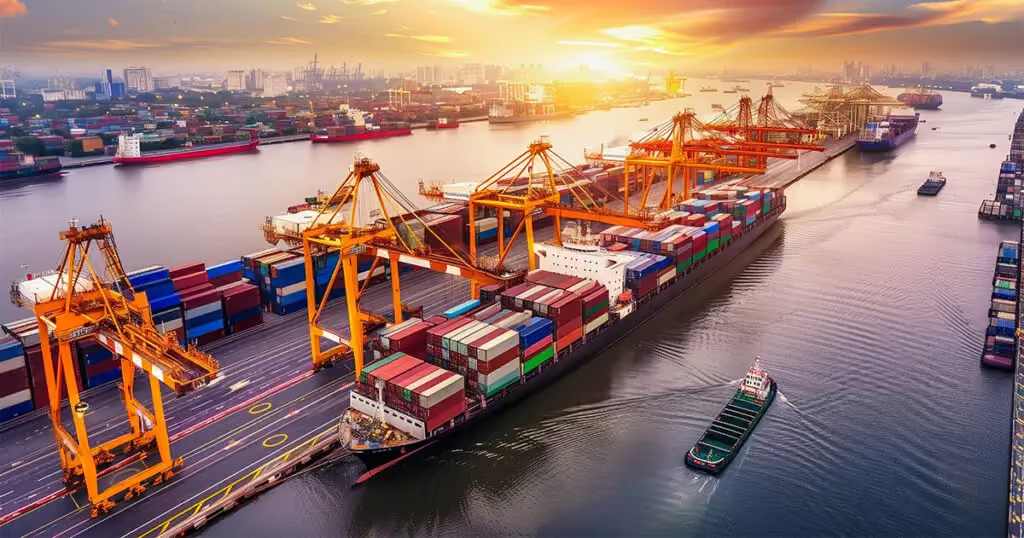
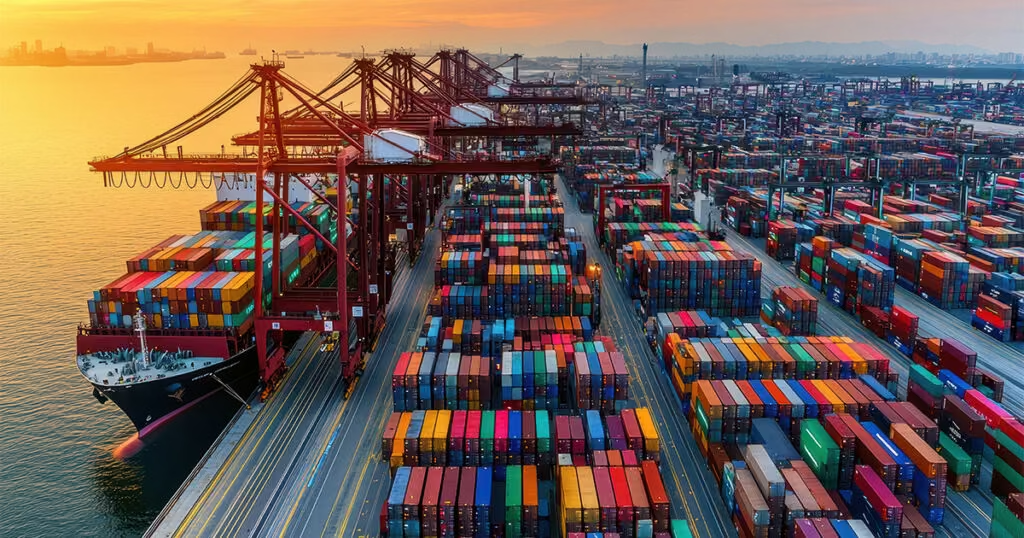
- Port operations across the Gulf remain uneven, with temporary suspensions, heightened inspections, and access restrictions reported at several facilities, including intermittent disruptions at Jebel Ali and continued closures in Bahrain.
- Warehousing and inland transport continue to operate in parts of the region but under elevated security protocols, particularly for hazardous, refrigerated, and high‑value cargo.
Broader Supply Chain Effects
- Global container capacity is tightening as vessels are repositioned away from Middle East corridors, increasing the risk of secondary congestion at alternative hubs in Asia, Europe, and Southern Africa.
- Elevated energy prices and fuel costs are contributing to network‑wide cost pressure, with potential knock‑on effects across manufacturing, retail, and food supply chains.
Customer Considerations
Customers may wish to consider the following actions:
- Review exposure to Arabian Gulf, Red Sea, and Suez‑dependent routings
- Allow for extended transit times and schedule disruption
- Prepare for freight, surcharge, and insurance‑related cost volatility
- Coordinate closely with logistics partners on contingency planning, diversion options, and inventory buffers
Our Support
APL Logistics continues to monitor carrier advisories, maritime security guidance, port and airport status, and insurance market developments. Our teams remain engaged globally and will communicate material updates as conditions evolve.
Sincerely,
APL Logistics
Sources
- Journal of Commerce (S&P Global): Middle East war slows trans‑Pacific service contract talks further, March 4, 2026
- Journal of Commerce (S&P Global): Middle East transshipment options to emerge in the coming days (DHL CEO), March 5, 2026
- Seatrade Maritime: London marine insurers extend Middle East war risk zones (Joint War Committee listed areas), March 4, 2026
- Maersk: Strait of Hormuz Closure – Emergency Freight Increase for World to/from UAE, Qatar, Saudi Arabia (Dammam and Jubail), Bahrain, Kuwait, Iraq and Oman (Sohar), Updated March 3, 2026
- Expeditors: Middle East Tension Escalation Update, March 2, 2026
- Global Cold Chain Alliance: Middle East Conflict Disruption Updates & Situation Report, March 4, 2026
- FreshFruitPortal: Global shipping crisis – Middle East conflict triggers rerouting, massive surcharges (latest update March 3, 2026)
- gCaptain (Reuters): Iran conflict forces Middle East oil shutdowns, disrupts shipping and strands ships near the Strait of Hormuz, March 2, 2026
- Reuters Graphics: The global chokepoint in the Strait of Hormuz, March 2, 2026
Disclaimer: This advisory does not constitute legal advice and is issued for general information purposes only. APL Logistics accepts no responsibility for any information contained within this advisory and refutes and excludes any liability in respect of the contents or for action taken based on such information.
Click here to download the advisory
About APL Logistics
APL Logistics is a leading global supply chain logistics provider focused on order management. With over four decades of experience, we offer innovative, end-to-end supply chain solutions across various industries. With a strategic balance of our world-class account management teams, proprietary digital solutions, and an extensive network, APL Logistics’ Order Management will enable your business to stand out, adapt faster, and execute more efficiently than your competitors.
The APL Logistics group of companies has a global network covering all major markets and is backed by a multinational workforce. APL Logistics Ltd is a member of the Kintetsu World Express group, a global logistics services provider. For more information, visit www.apllogistics.com, email us at global_marketing@apllogistics.com, and connect with us on LinkedIn, Instagram, and YouTube.
Back to Articles
Updates
Subscribe to The Pulse Newsletter
Get in Touch
Whether you have a question, need support, or want to learn more about our logistics solutions, fill out the form below and our team will get back to you as soon as possible.
We'll be in touch soon.







.avif)
.avif)

.avif)

.avif)
.avif)



























Your Partner for Connected, Integrated Solutions
APLL works with enterprises that manage complex supply chains, delivering custom solutions and reliable execution.