
Back to Articles
Freight Spending Jumps as Ocean Rates Rise Across Stretched Freight Markets
Share
Link Copied

Link Copied

Shippers are seeing a market that feels calmer on volume than on cost, with less room for error across trucking, ocean shipping, warehousing, and labor. Truck freight spending increased even while shipment volume hardly changed. Ocean carriers saw demand during the early peak season fill up vessel space, giving them more pricing power.
Transportation prices hovered around the ceiling, according to the Logistics Managers’ Index, and U.S. Customs stepped up enforcement against small and foreign importers. Meanwhile, trucking jobs reversed April’s gains, even as warehouse hiring improved. The picture is uneven, but freight costs are now being shaped more quickly by decisions about capacity, enforcement, fuel, and inventory than by volume.
Freight Spending Jumps as Capacity Tightens Faster Than Demand
U.S. shippers paid sharply more for truck freight in Q1 2026, even as freight volumes barely budged. National shipment volume fell 0.3% from Q4 2025, but spending by shippers soared 12.9%. That is the largest quarterly jump since late 2020, according to the U.S. Bank Freight Payment Index. Shipments were up 0.6% year over year, and spending was up 21.8%.
There are fewer trucks competing for freight after a long downturn. Late-quarter fuel spikes added pressure, but tighter capacity looks to be the larger force. Spending was up 19.6%, with the biggest gains in the Midwest, which rose 5.4% quarter over quarter.
Ocean Rates Rise as Early Peak Season Strains Capacity
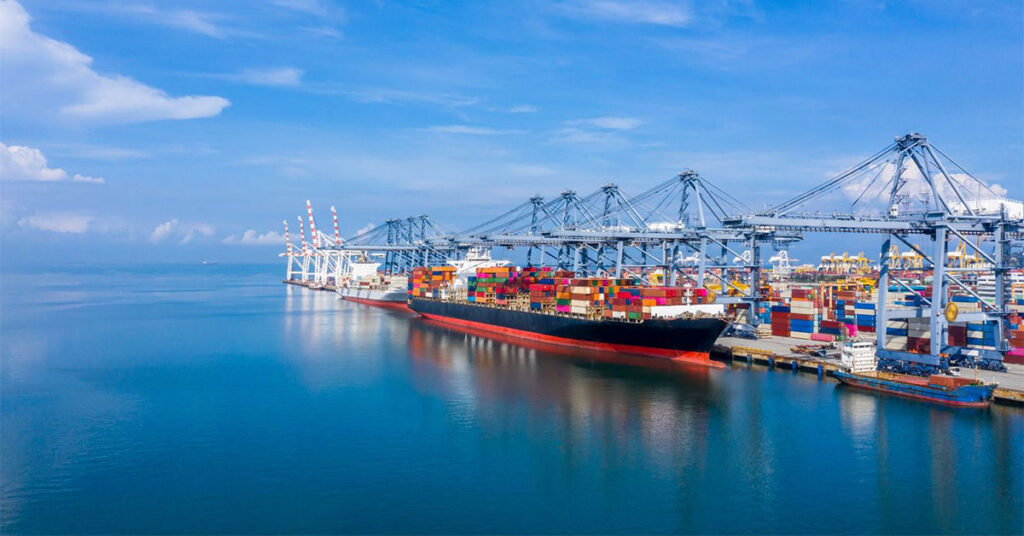
Ocean carriers are pushing through higher rates as importers front-load shipments on the transpacific and Asia-Europe lanes. A slew of tailwinds of demand, port congestion, higher bunker fuel, and Red Sea diversions have made vessel capacity tighter than expected.
In the first week of June, the Platts Global Container Index surged 70% to $4,662 per FEU month over month, and Drewry’s World Container Index jumped 26% to $2,800 per FEU. Although the number of vessels on order has increased, the Red Sea detour continues to eat into capacity. Now, forwarders are advising customers to book three to five weeks in advance. Carriers will probably use the moment to recover Q1 losses and protect margins.
Transportation Pricing Hits Record High as Truck Capacity Shrinks
Transportation prices rose at the fastest pace in the 10-year Logistics Managers’ Index data, with May’s reading at 96 out of 100. Capacity remained severely limited at 31.7, and utilization was high at 69.5. The report attributed the price hike to the closure of the Strait of Hormuz, rising fuel prices, tighter truckload supply, and enforcement action against noncompliant drivers.
As spot rates increase, shippers are seeing more tenders rejected. Manufacturers and wholesalers pulled inventories forward to avoid shortages, squeezing upstream firms more than retailers. Logistics managers expect to operate under tight conditions, with readings of 40.4 for capacity, 70.2 for utilization, and 91.4 for pricing for the next 12 months.
US Tightens Customs Scrutiny on Small and Foreign Importers
President Donald Trump signed an executive order ratcheting up customs pressure on small, one-off, and foreign importers in the U.S. The order increases bonding requirements for importers of record, requires proof of domestic assets, and prohibits foreign importers from using informal entries that are often associated with low-value shipments.
It also requires importers to provide CBP with volume forecasts and more detailed information on ownership and products. The move comes as brokers and shippers report increasing customs holds on inbound containers, particularly cargo from China and Vietnam. The increase likely reflects tighter trade policy, the end of de minimis, and CBP’s heavier use of AI screening.
Trucking Jobs Slip Back as Warehousing Posts Fourth Monthly Gain
Truck transportation employment in May bounced back from its temporary April dip to just above March levels. The Bureau of Labor Statistics reported that truck transportation jobs fell to 1,424,800 in May, down 4,400 from April. That left employment 500 jobs higher than March, 2,400 below the end of 2025, and nearly 23,000 below May 2025.
Warehouse hiring moved in the opposite direction. Jobs rose by 6,400, the fourth straight monthly gain and the biggest one-month jump since May 2024. Long-haul truckload hiring showed signs of a rebound in March and April, but shippers should be cautious, as employment remains low by recent-decade standards. High fuel prices and a changing regulatory environment continue to constrain capacity, as they did last year.
Ship Seamlessly With APL Logistics
Shipping internationally means coordinating freight, customs, warehousing, and last-mile delivery, often with different providers who don’t communicate with each other. With operations in more than 60 countries and over 200 facilities, APL Logistics brings all of that under one roof. This way, you are not chasing updates across four different vendors or finding out about problems after the fact. Contact us today to get started.
Back to Articles
Updates
Subscribe to The Pulse Newsletter
Get in Touch
Whether you have a question, need support, or want to learn more about our logistics solutions, fill out the form below and our team will get back to you as soon as possible.
We'll be in touch soon.















.avif)

.avif)



.avif)


.avif)

.avif)























































Your Partner for Connected, Integrated Solutions
APLL works with enterprises that manage complex supply chains, delivering custom solutions and reliable execution.