
Back to Insights
Trucking Recovery Gains Ground as Early Peak Season Keeps Ocean Rates High
Share
Link Copied

Link Copied

Back to Insights
Carriers are gaining more pricing power because there are fewer trucks and drivers on the road. At sea, shippers are rushing to load cargo before new charges take effect. Importers will need to submit additional information and have fewer options for low-value entries. At ports where companies have shorter planning windows, inbound is stronger. Meanwhile, the rapid build-out of artificial intelligence infrastructure is creating new cargo security risks.
Trucking Capacity Shrinks and Spot Rates Rise
The U.S. trucking industry recovery is carrying into midyear, but tighter capacity rather than stronger freight demand is doing most of the work. DAT reported declines in May freight volume for van, refrigerated, and flatbed. Spot rates were still up 22 cents, 24 cents, and 19 cents per mile, respectively.
ACT Research anticipated that truckload spot rates, excluding fuel, would increase by more than 40% year over year in June. Driver shortages are reducing the availability of capacity, leading to reduced spending on equipment, stricter immigration laws, enforcement actions, crackdowns on fake electronic logging devices, and the closure of driver schools. Early Peak Season Keeps Ocean Rates High
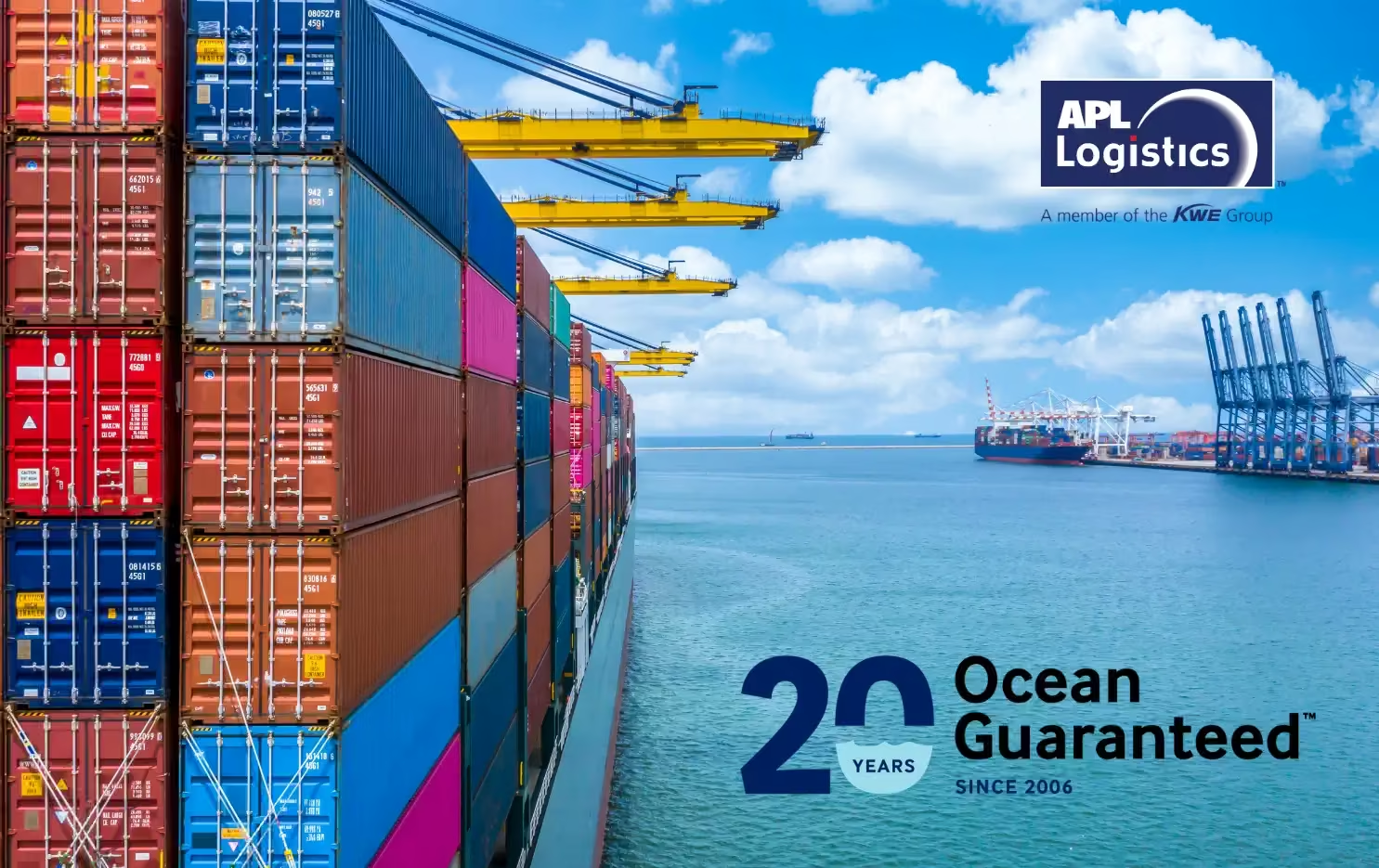
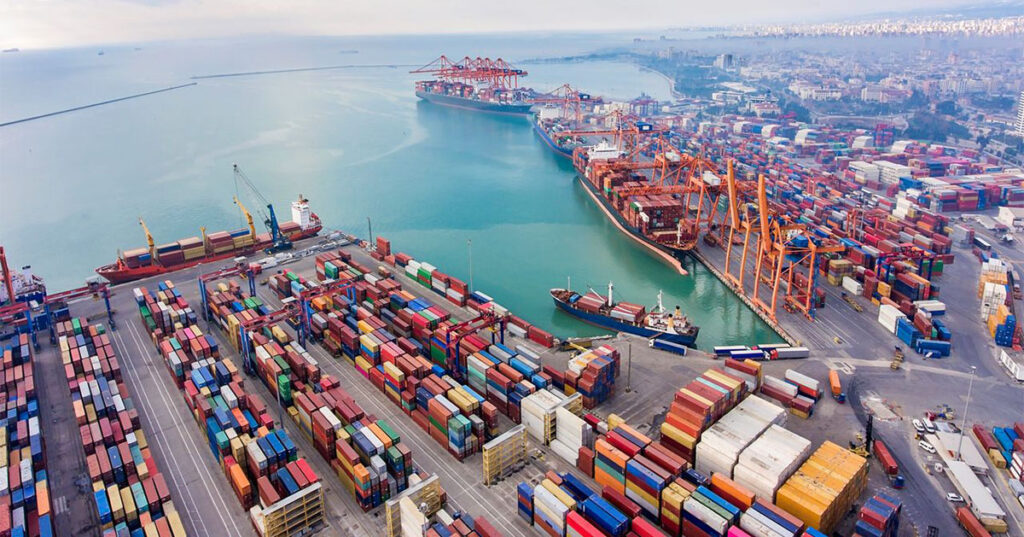
Asia-U.S. container rates remain high as shippers rush cargo to beat fuel surcharges, tariffs, and manufacturer price increases. West Coast spot rates in mid-June were at $4,836 per FEU, while East Coast rates were up 4% at $6,558. Carriers are rolling containers and cutting back on allocations. General rate increases and peak season surcharges went into effect June 1.
Even with a reopening of the Strait of Hormuz, it could take months for shipping to return to normal. Lower fuel costs may ease pressure on spot shipments. Large contract shippers will still face higher third-quarter bunker adjustment factors. June bookings may mark the top of the early peak as importers resist further July rate increases.
US Tightens Importer Rules as Customs Penalties Rise
A June 3 executive order tightens requirements for foreign importers of record and increases the financial burden of customs violations. Importers must have adequate U.S. assets, bonding, or both within 180 days. They will also need to provide disclosures on ownership, shipment volume, production, and the supply chain. More accountability will be placed on customs brokers to ensure that importers check their records.
Foreign importers will not be able to use Type 11 informal entry for shipments valued at less than $2,500. That change could hurt overseas sellers and carriers that rely on low-value entries after the de minimis exemption ends. CBP will also require importers to stay in good standing. Repeat or serious offenders might be banned from importing. Penalty settlements usually need to be at or above 50% of the assessed amounts, cutting the steep discounts companies negotiated for in the past.
LA Imports Jump as Shippers Bring Cargo Forward
The Port of Los Angeles said it handled 840,165 TEUs in May, up 17% from a year ago, as companies rebuilt inventories and moved goods ahead of possible fuel and trade policy changes. Loaded imports surged 26% to 449,370 TEUs. The comparison was aided by weak traffic in May 2025, when tariffs severely curtailed China-linked cargo. Year-to-date volume was 4.12 million TEUs, up 1.4% from last year.
Factors driving the cargo movements include stock replenishment, fuel cost concerns, trade uncertainty, and readiness for upcoming retail seasons. Loaded exports declined 10% to 107,657 TEUs. Empty containers grew 18% to 283,138 TEUs. More empties could indicate that carriers are staging more inbound cargo, but the outlook remains tied to tariff policy, consumer demand, and fuel prices.
AI Infrastructure Growth Creates New Targets for Theft
AI data centers are driving more high-value copper, processors, networking gear, and memory modules into global freight networks. S&P Global projects demand from AI and data center usage will grow from 1.1 million metric tons in 2025 to 2.5 million metric tons by 2040. These goods are expensive, difficult to replace, and traded on multiple markets, which could make them attractive to organized theft groups.
Criminals have recently turned to carrier impersonation, false pickups, stolen shipment data, and fake paperwork rather than simply physical break-ins. An alleged scheme that spanned Pennsylvania, Virginia, and New Jersey involved nearly $5 million in stolen freight, including copper. AI-related theft represents a small proportion of reported cargo crime. But the risk is still likely to rise as more expensive parts move through trucking terminals, warehouses, and cross-border routes.
Ship Seamlessly With APL Logistics
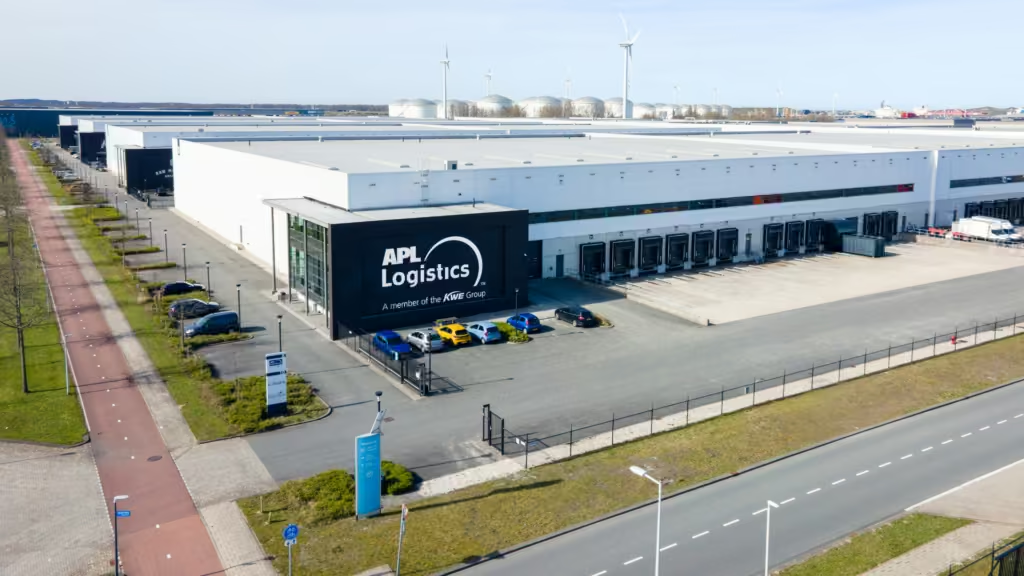
Shipping internationally means coordinating freight, customs, warehousing, and last-mile delivery, often with different providers that don’t communicate with each other. With operations in more than 60 countries and over 200 facilities, APL Logistics brings all of that under one roof. This way, you are not chasing updates across four different vendors or finding out about problems after the fact. Contact us today to get started.
Updates
Subscribe to The Pulse Newsletter
Get in Touch
Whether you have a question, need support, or want to learn more about our logistics solutions, fill out the form below and our team will get back to you as soon as possible.
We'll be in touch soon.






.avif)
.avif)
.avif)


.avif)


.avif)

.avif)










































Your Partner for Connected, Integrated Solutions
APLL works with enterprises that manage complex supply chains, delivering custom solutions and reliable execution.