
Back to Articles
Truckload Rates Hit Four-Year High as Ocean Volumes Set Records

Share
Link Copied

Link Copied

Freight is moving in consolidated volumes again, and shippers are paying for it. U.S. truckload linehaul rates have climbed to their highest level in four years as shipment counts finally grow, global container volumes hit a new monthly record, and peak season in Asia runs well past the date forecasters circled on the calendar.
Analysts say ocean spot rates have likely topped out but will stay far above where they stood before the Hormuz crisis. The common thread is a market in which demand is healthy enough to matter, and capacity is tight enough to set the price. Read on to see how trucking rates, ocean volumes, and the long peak season are shaping freight costs heading into the end of the year.
Truckload Linehaul Rates Climb 10% Year Over Year
Truckload linehaul rates rose 10.1% year over year in September, according to data from Cass Information Systems. The Cass Truckload Linehaul Index, which strips out fuel and accessorial charges, sat at its highest absolute reading in four years and marked the 21st straight month of annual gains. Freight shipments rose 1.9% year over year, the second consecutive increase after 42 months of declines, while total freight expenditures jumped 20.4% as diesel prices climbed 68% from a year earlier.
The mix of numbers matters. Cass noted that spot rates are easing slightly, but the much larger contract market is still adjusting upward, which explains why the index keeps rising even when the spot market cools. That lag is typical of contract pricing: carriers reset rates during bid season based on conditions that have already played out, so the full effect of tighter capacity reaches shippers months after it appears in the spot data.
Peak Season Runs Longer Than Expected Across Asia
Peak season is stretching past its usual end date across Asia. Demand tied to AI hardware, semiconductors, and year-end retail buying is holding up air and ocean volumes, while typhoon backlogs and short-notice blank sailings keep space tight. Shanghai berthing waits could stay above five days into late October, and Yantian faces pressure on container availability.
Shippers expected October to bring a slowdown that never arrived, which increases the risk of space vanishing before a booking is confirmed. Routes are diverging as Asia-U.S. rates rise with blank sailings, while Asia-Europe rates are falling as more services return through the Suez Canal. The U.S.-China trade truce now runs to January 10, 2027, offering near-term certainty even as Section 301 investigations continue.
Asia-U.S. Rates Have Likely Peaked But Collapse Unlikely
Spot container rates from Asia to the United States have likely reached their post-Hormuz peak, according to Xeneta Chief Analyst Peter Sand. Rates edged up on October 1 to $8,346 per FEU to the West Coast and $11,523 to the East Coast, more than four times their pre-crisis levels from February 28. Easing port congestion as typhoon season winds down and the Golden Week slowdown are helping turn the market, and demand is not strong.
Sand expects East Coast rates to fall further than West Coast rates, because the East Coast premium has swelled to $3,177 per unit from $772 before the crisis, with three-month forecasts of $6,000 to $7,000 for the East Coast and $4,500 to $5,500 for the West Coast. He described it as a sizable correction, not a collapse, so budgets should still assume elevated costs through the end of 2026.
Container Volumes Set Record as Pricing Hits Two-Year High
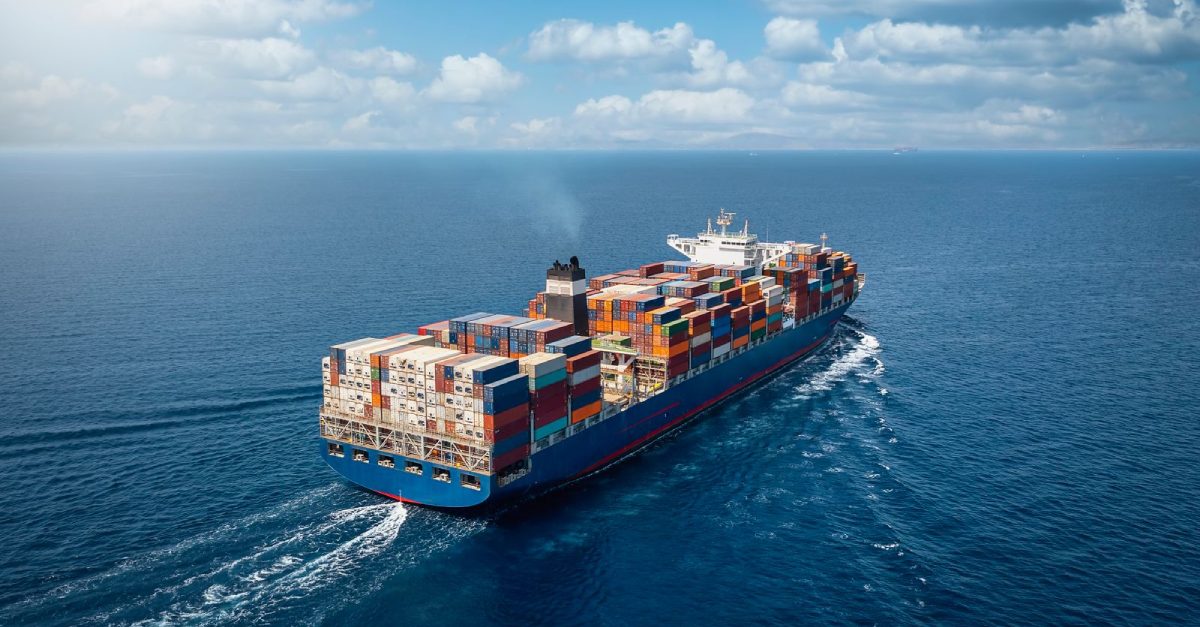
Global container shipping volumes reached a record 17.46 million TEUs in August, up 3.7% from a year earlier, according to Container Trades Statistics. Through the first eight months of 2026, volumes are up 4.7%, which shows demand has held up despite elevated fuel prices, disruption in the Arabian Gulf, Panama Canal constraints, and shifting tariffs. Pricing moved the other way from what many shippers hoped: the CTS Global Price Index rose to 117, its highest level since July 2024 and about 50% above January, because rerouted vessels and higher operating costs have absorbed capacity since late February.
North America’s recovery is worth noting, with imports up 2% through August and trans-Pacific trade up 5% after a weak start to the year marked by tariff uncertainty and typhoon congestion. CTS cautioned that slowing month-to-month growth could signal moderating demand, so the fourth quarter will test whether high rates and record volumes can coexist, a tension we covered when ocean freight constraints became supply chain constraints.
Driver Pay Climbs as Carriers Compete for Capacity
Most trucking companies plan to raise driver pay in 2026, according to the American Trucking Associations Driver Compensation Study 2006. The survey of more than 130 fleets found median pay for irregular route truckload drivers rose 8.3% to $73,639 in 2025 compared with 2023, while dedicated route pay rose 4.2% over the same period. ATA’s chief economist said compensation kept moving higher through one of the longest and most difficult freight downturns in recent memory.
The picture isn’t as bright for take-home earnings — leased-on independent contractors at truckload carriers earned a median of more than $170,000 in 2025 versus $186,016 in 2023, and linehaul LTL drivers earned $85,000 versus $94,525. ATA cautioned that different carrier groups were surveyed in each period, which may account for part of the gap. Rising pay matters to shippers because it is one of the costs carriers pass through in contract rates, and it reflects the same capacity pressure showing up in the Cass data.
Ship Seamlessly With APL Logistics
This week’s news points to a freight market with healthy volume and little pricing relief, which rewards shippers who plan capacity early and keep options open across modes and routes. International shipping means coordinating freight, customs, warehousing, and last-mile delivery, often with different providers that don’t communicate. With operations in more than 60 countries and over 200 facilities, APL Logistics brings it all under one roof. This way, you are not chasing updates across four different vendors or finding out about problems after the fact. Contact us today to get started.
Back to Articles
Updates
Subscribe to The Pulse Newsletter
Get in Touch
Whether you have a question, need support, or want to learn more about our logistics solutions, fill out the form below and our team will get back to you as soon as possible.
We'll be in touch soon.

Your Partner for Connected, Integrated Solutions
APLL works with enterprises that manage complex supply chains, delivering custom solutions and reliable execution.