Back to Articles
Inside OceanGuaranteed™: Day-Definite Mechanics
Share
Link Copied

Link Copied

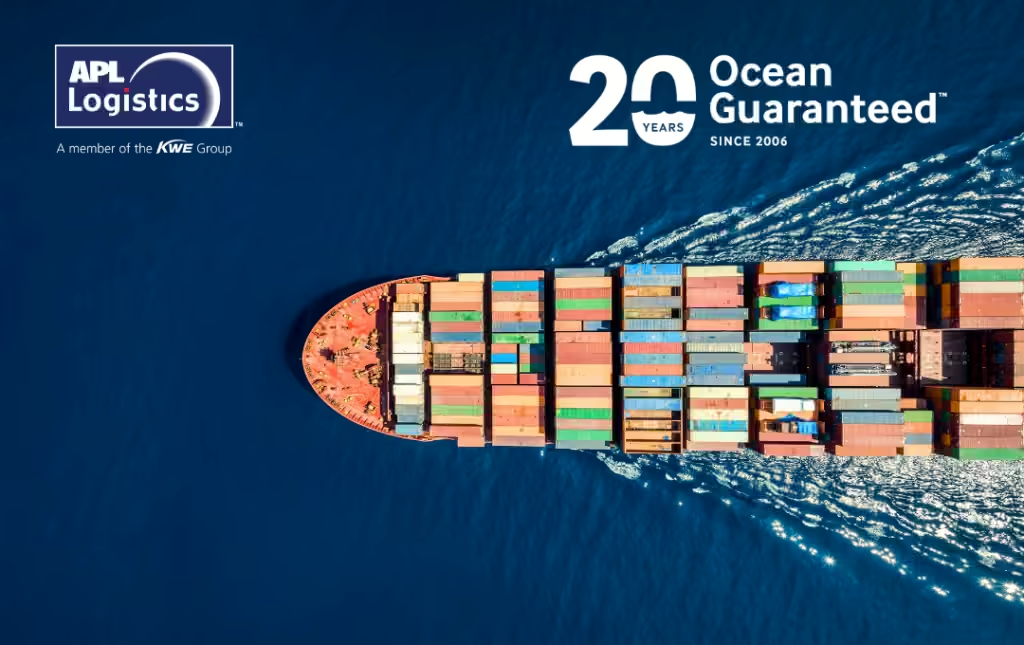
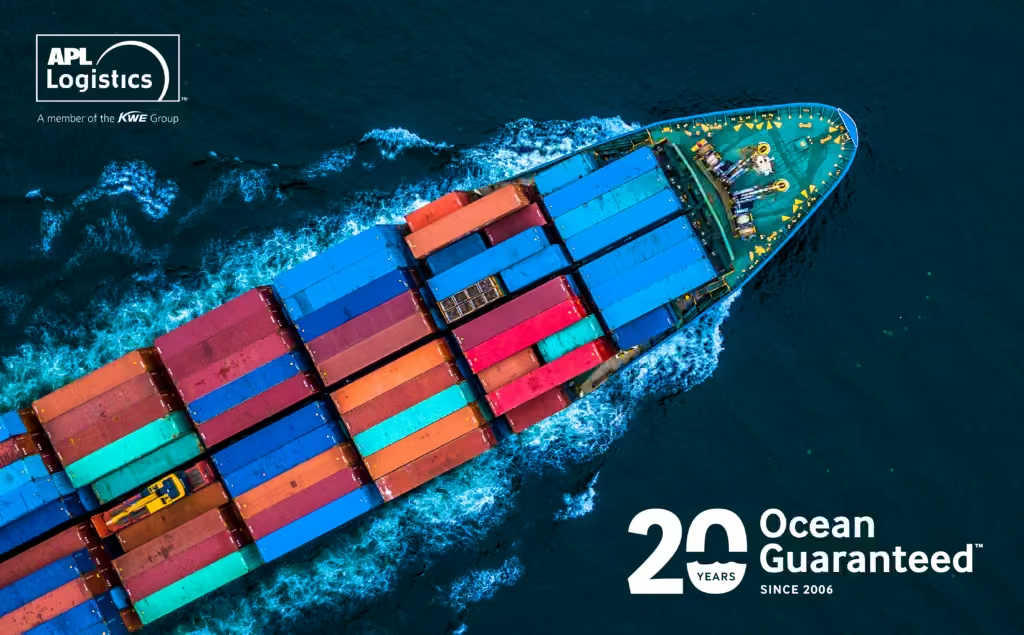
This is the first of a multi-part series with OceanGuaranteedTM subject-matter experts from APL Logistics. Each installment peels back the curtain on a different part of the service, beginning with the operating model that enables day-definite ocean delivery. While most ocean freight movement relies on estimates, OceanGuaranteedTM is built on commitments. The infrastructure that is needed to support that distinction is what this conversation is about.
What Happens Between a Booking and a Day-Definite Arrival?
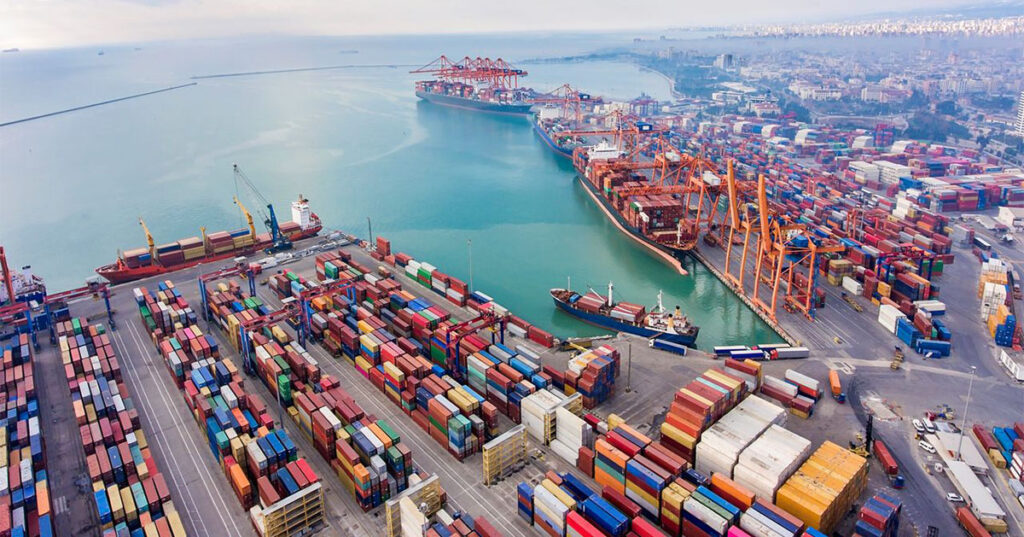
Everything is engineered backward from a delivery date. This means when a booking is confirmed, a delivery date is set. That date becomes the contract. Following that, the entire operating chain goes into reverse to protect it: priority vessel loading, priority discharge to minimize port dwell time, prearranged customs clearance protocols, priority drayage allocation at the destination port, and team driver trucking to compress the last-mile transit window.
For transload shipments, cargo is transferred 1:1 from the ocean container to a domestic-specific trailer. There is no comingling with other freight, which means there are no delays in depot handling.
This is where OceanGuaranteedTM is different from regular full container load (FCL) service. For a standard FCL booking, you will get a rate and an ETA, which is at best a forecast. However, with OceanGuaranteed™, you have a guaranteed date, with a financial penalty for nondelivery. That distinction means there is predictability. Each link in the operating chain behaves differently because the cost of failure now falls on APL Logistics rather than the customer.
Who’s Running This, and Where?
OceanGuaranteedTM is a standalone offering facilitated by a dedicated team within APL Logistics’ ocean solutions division. The team has an origin operations layer that coordinates 13 ports across Asia: Qingdao, Shanghai, Ningbo, Xiamen, Shenzhen, and Hong Kong in China; Kaohsiung in Taiwan; Bangkok in Thailand; Ho Chi Minh City and Haiphong in Vietnam; Singapore; Jakarta in Indonesia; and Busan in South Korea.
On the other side, a U.S. destination operations team manages port coordination. Customs clearance and last-mile delivery are also part of the package. But the two layers are supported by a management function that manages carrier slot agreements and exception escalations. There is also a tech and visibility team that manages the tracking platform, as well as commercial resources embedded within specific industry verticals.
All lanes terminate at U.S. door delivery to any ZIP code in the continental United States, and some LCL service is available in Canada and Mexico. Capacity is not unlimited, so it is administered as a finite, allocated pool. This way, OceanGuaranteedTM is sold as a spot product or available under volume commitments, but it is never oversold. That slot discipline is what makes day-definite delivery possible in the first place.
That weekly space secures the carriers’ commitment on the front end, even in peak season, when the wider market is clamoring for capacity.
Why Does the Guarantee Work and How Rare is a Claim in Practice?
OceanGuaranteedTM pays 20% of the freight charge if your shipment arrives even a day late. The commitment is for both FCL and LCL services. However, there are conditions and restrictions. The mechanism was designed to be simple yet predictable. For starters, the delivery date is set at the time of booking, at which point it becomes a binding commitment. If the committed date is missed, the customer files a claim through the OceanGuaranteedTM application.
At this point, the shipment record is compared with the confirmed delivery date, and the refund is processed against the freight charge. If the claims process were complicated, it would undermine the credibility of the product. This is why it is deliberately kept simple. What is interesting is not why claims are operationally uncommon, but why they are structurally rare.
The committed delivery date is not set to the theoretical minimum transit time. And there is a conscious conservative approach to assigning dates that ensures predictability. The operating model provides a date that the team is very confident it can achieve, based on the pre-committed slot infrastructure, contingency capacity buffers, and one often-unmentioned factor: managed acceptance. OceanGuaranteedTM will not take on cargo they cannot deliver reliably. A reservation is accepted only if the conditions and capacity allow a specific date to be guaranteed.
When claims do occur, they tend to be clustered around truly exogenous events, such as port congestion, severe weather, or labor actions. Even in those cases, most of the impact is absorbed by the contingency model. Every claim triggers a postmortem review, and the cumulative operational learning from those reviews over many years is a major reason the model is more refined today than at launch.
What Makes This Hard to Replicate?
Any freight forwarder can promise you a delivery date. What’s hard to replicate is the 20-year history of carrier contracts, the depth of the drayage network, and the operating protocols that make the guarantee predictable and easy to honor, precisely because it is rarely triggered. Our system actually does work. The guarantee is a sign that the operating model underpinning it has been stress-tested through multiple peak seasons, capacity crunches, and market disruptions. It is not a sales gimmick.
No other NVO in the market has built this product to this scale, across this many Asian origins, for both FCL and LCL, and with a financial stake attached to each shipment.
Interested in APL Logistics’ OceanGuaranteed™ Offering?
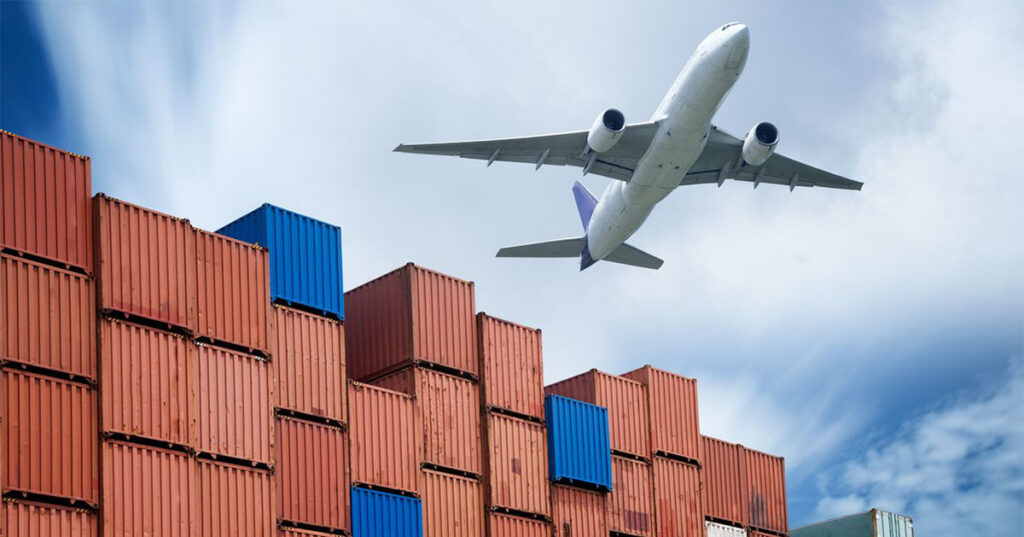
APL Logistics’ OceanGuaranteedTM service is available for FCL and LCL shipments from 13 Asian origin ports to any door in the continental United States, with select LCL coverage in Canada and Mexico. A 20% money-back guarantee applies if the committed delivery date is not met. It costs up to 65% less than air freight while also producing 95% less carbon emissions. Contact us today to find out whether OceanGuaranteedTM fits your supply chain.
Back to Articles
Updates
Subscribe to The Pulse Newsletter
Get in Touch
Whether you have a question, need support, or want to learn more about our logistics solutions, fill out the form below and our team will get back to you as soon as possible.
We'll be in touch soon.






.avif)
.avif)

.avif)

.avif)
.avif)

























Your Partner for Connected, Integrated Solutions
APLL works with enterprises that manage complex supply chains, delivering custom solutions and reliable execution.