Back to Articles
LCL Shipping: The Hidden Cost of Consolidation Delays
Share
Link Copied

Link Copied

Less-than-Container Load(LCL) shipping is a staple in global supply chains. Businesses often facesituations where they do not have enough cargo volume to justify a fullcontainer but still need a cost-effective way to get shipments to the customersor manufacturers awaiting it. It’s a valuable way to keep inventory flowingwithout unnecessary expediting costs.
However, LCL has atrade-off that is often underestimated: its complexity.
When businesses understandwhere and how this complexity occurs, along with its downstream impacts, theycan make more informed decisions about how to move smaller and time-sensitivecargo loads. This article explores this challenge in more detail, informed byinsights shared by Ivan Vasco, Manager of Product and Pricing Support at APLLogistics.
How LCL Becomes More Complex Than FCL
Full-Container Load (FCL)shipments typically move from one shipper or origin port to a singledestination, centered directly on the business that owns the container space.LCL, by contrast, relies on shared infrastructure, with multiple stakeholdersand many handoffs throughout the journey to the destination warehouse.
Every time there is a newtouchpoint, there is a new opportunity for delays. To compound this complexity,supply chain leaders are working in a much more volatile logistics environment,where interruptions beyond a company’s control are now more common than theywere even a decade ago.
This complexity arises before thecargo even leaves its origin. Documentation must be checked, and customsrequirements met. Cargo must also be inspected before consolidation can occur,and the container must wait until all cargo is received before departure.
It continues as the container movesthrough trade lanes. Shipments pass through multiple gateways or ports, androutes may not be as direct as those used in FCL movements. This meansadditional transshipment and transfer facilities, or deconsolidation points,that are not part of FCL shipping. This process maximizes efficiency and keepscosts tight, but it also creates the ideal breeding ground for disruption.
Small Delays Compound Quickly
Typically, these frictionpoints are seen as minor delays that could add a day or two to the deliveryschedule. But, in reality, the effects can be far more significant.
If a shipment misses itsscheduled consolidation window or vessel departure, that impact won’t remainisolated. It will cascade through the remainder of the journey. One missedconnection early in the route could impact everything through to its final railor trucking schedule.
With today’s businessesoperating on tighter inventory cycles, this kind of delay can quickly escalatefrom a missed window to a widespread operational challenge. Customercommitments can be missed, or inventory shortages impact production. Companiesoften find themselves paying for expensive last-minute interventions like airfreight or faster last mile transportation just to keep operations runningsmoothly.
This does not mean LCL isflawed. In fact, it is an essential and effective solution for many types ofcargo. The challenge lies in recognizing that cost efficiency comes withadditional coordination needs, especially for time-sensitive shipments.
External Pressures Now Make Coordination Difficult
Congestion and disruptionare not novel in supply chains. However, the post-pandemic environment hasbecome more difficult to predict. Instead of isolated and occasionaldisruptions, businesses often have to juggle multiple challengessimultaneously.
Companies can no longerrely on delays resolving themselves, or assume that alternative capacity willbe available. What’s now needed is resilience in transportation strategies fromthe outset. This requires a clear understanding of the vulnerabilities we’venoted and strategies to minimize unnecessary handoffs outside the company’scontrol.
One of the biggestfrustrations in traditional LCL shipping is the lack of visibility across thejourney through CFS hubs, origin, and departure, and the lack of predictabilityaround arrival times.
Without that visibilitythroughout the entire journey, it is difficult to identify potentialdisruptions and craft suitable solutions before they become significantproblems. Without a shipping partner that can offer alternative solutions todisruptions and clarity on arrival windows, LCL loses much of its value.
As Ivan Vasco explains,businesses are increasingly prioritizing dependable outcomes over ambitioustransit promises. "Customers want reliability more than speed. When a lotcan go wrong, and if there's not a proven track record, then it doesn't meananything."
This makes the ability tomonitor shipments end-to-end and adapt to disruptions a critical operationalrequirement, not just a value-added service.
Taking a More Integrated Approach to Traditional LCL Shipping
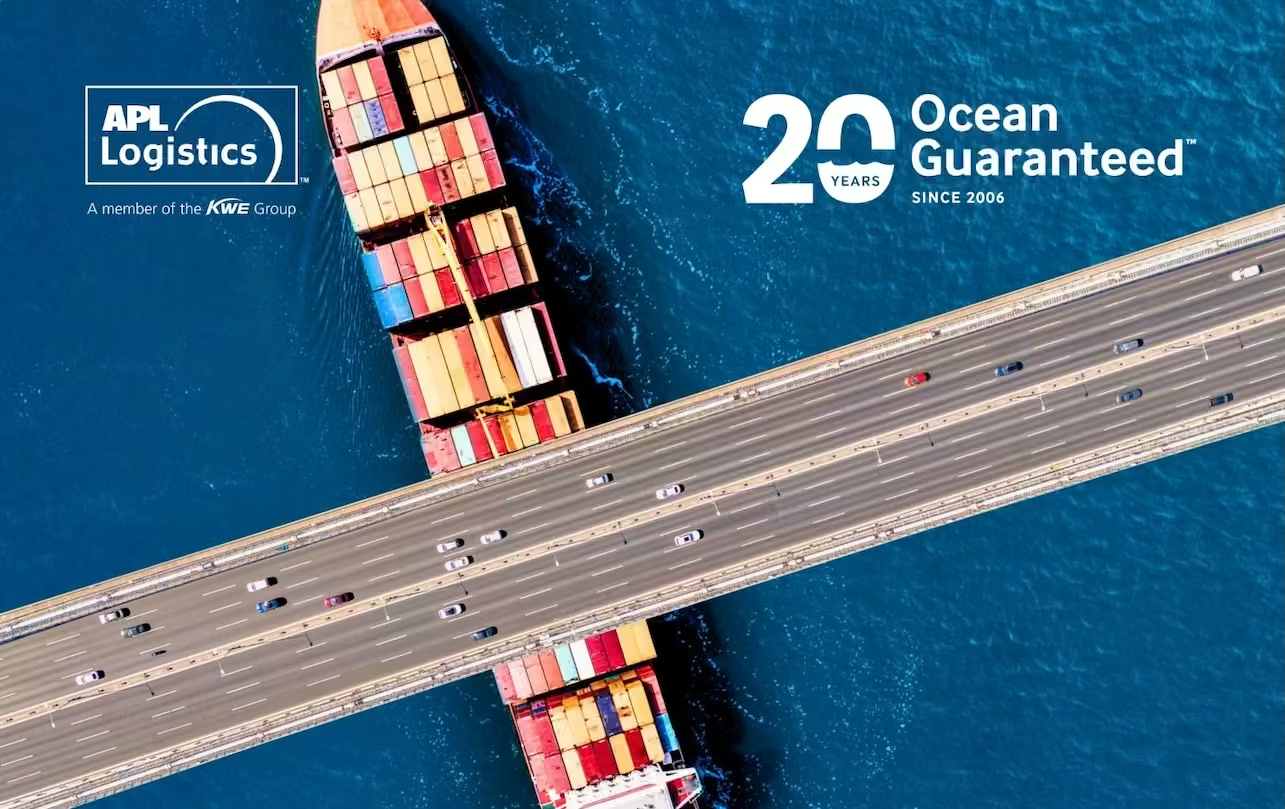
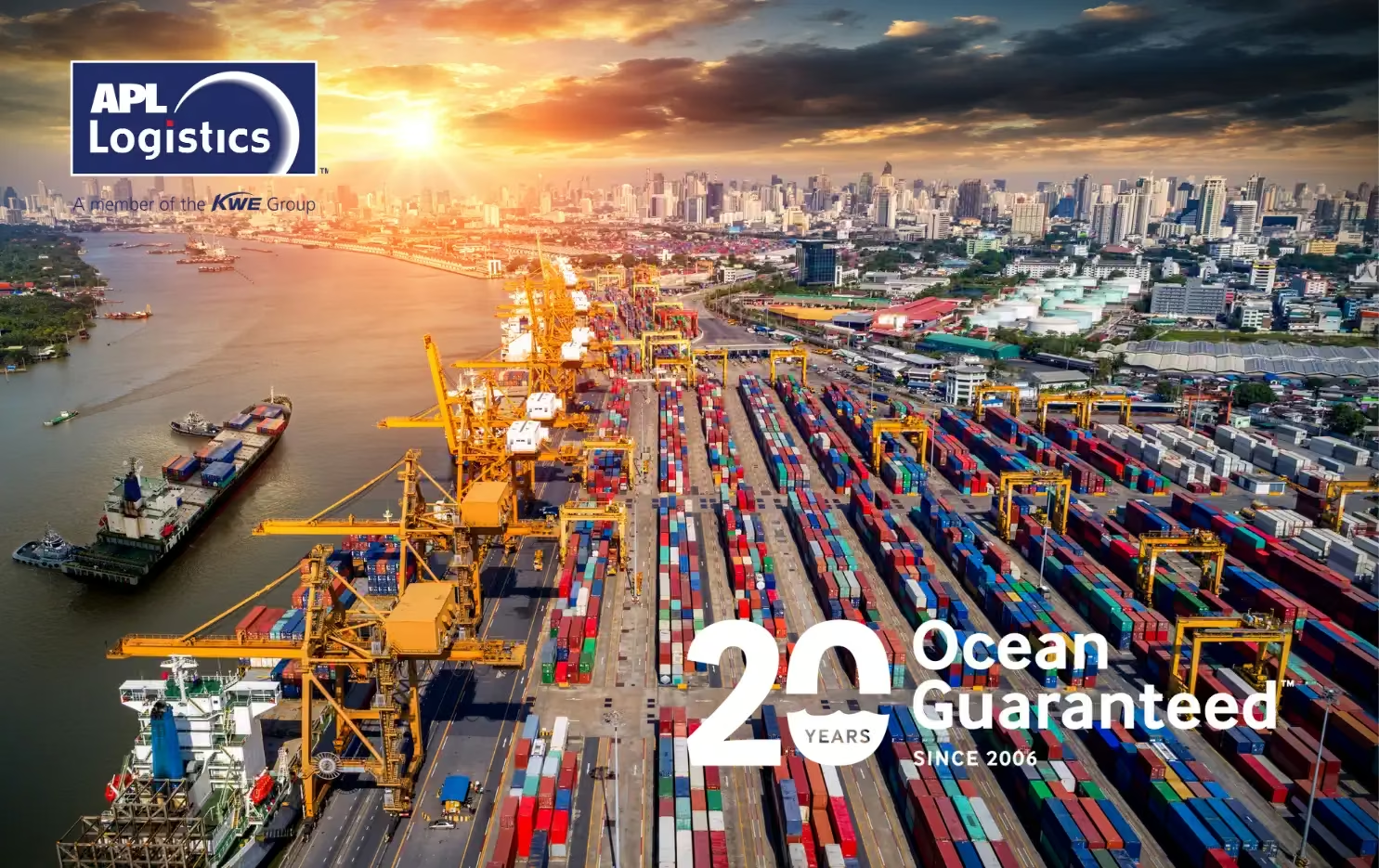
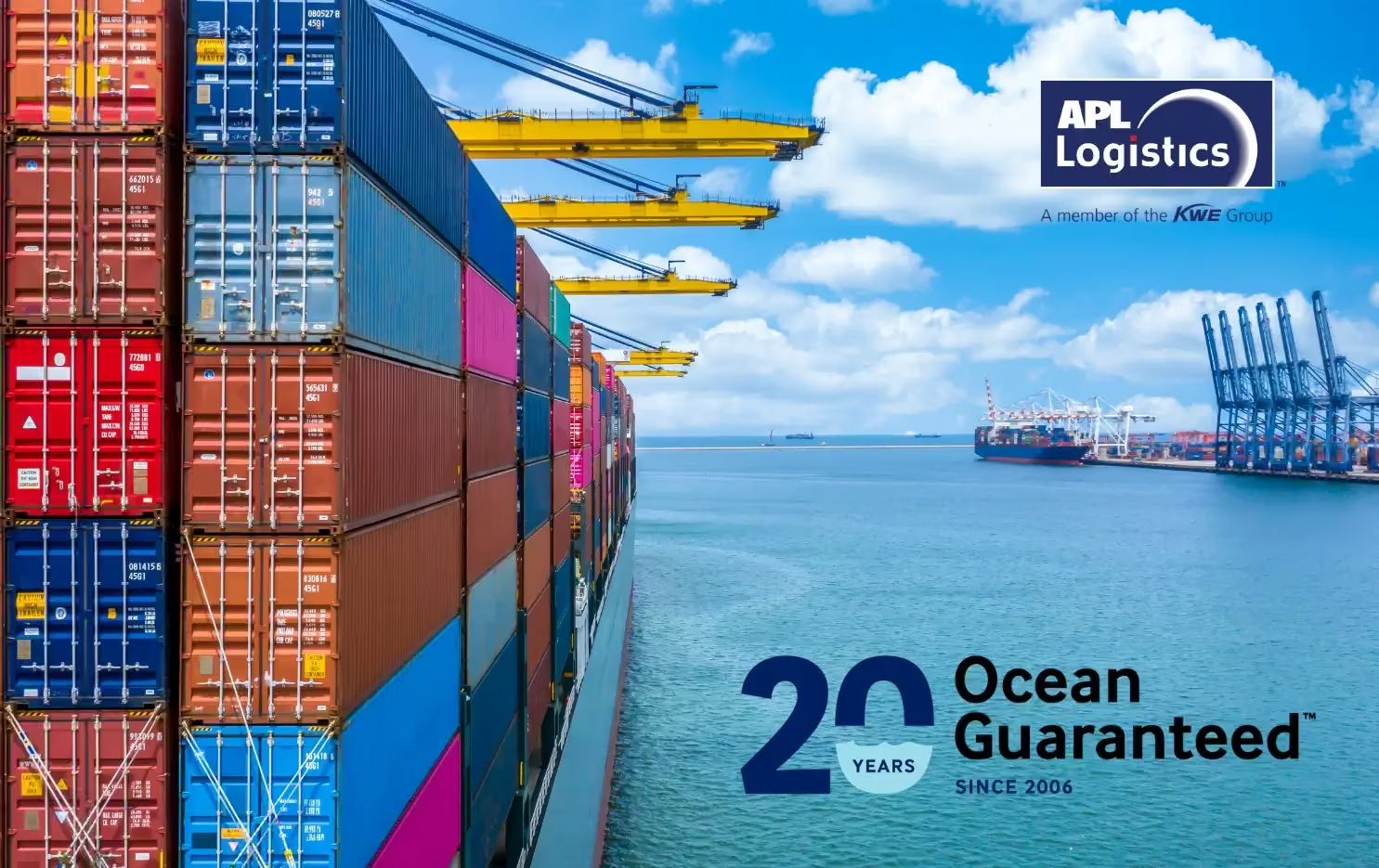
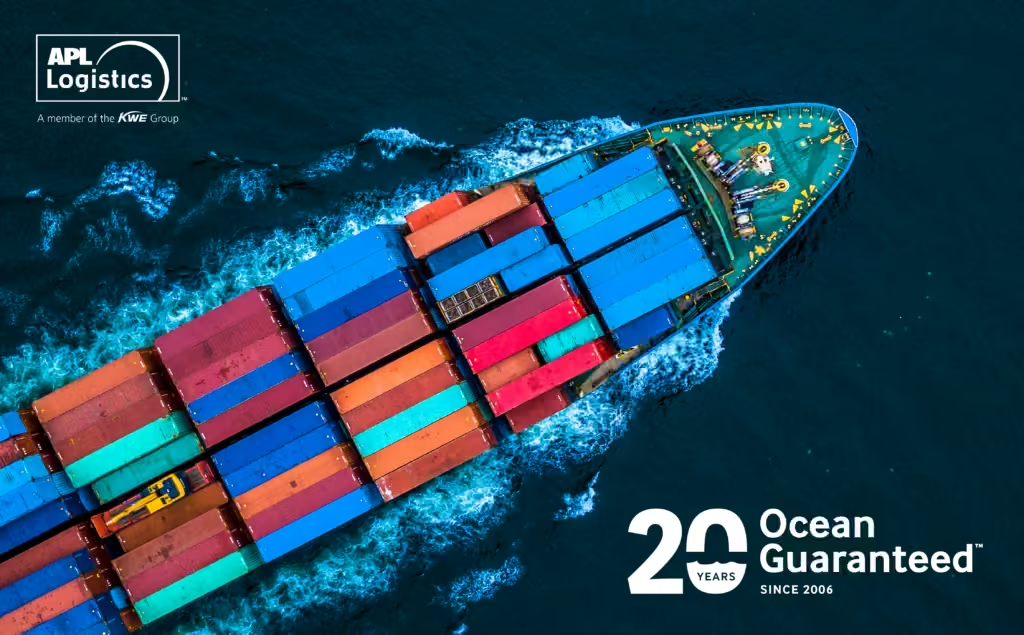
Many companies haveresponded by adopting a segmented approach to transportation planning, perhapsreserving a portion of a critical cargo for air freight in the case ofdate-critical shipments, while sending the remainder via traditional LCL orwaiting for FCL options. They are also increasingly favoring LCL options withguaranteed transit times and delivery dates within proven partner networks,such as APL Logistics’ OceanGuaranteed™ service. With OceanGuaranteed™specifically, companies also benefit from self-operated consolidation services,again returning control and accountability.
This approach can delivermeasurable results. One of APL Logistics’ clients, a large US-based sportsapparel and footwear retailer, faced persistent challenges using traditionalLCL shipping between Asia and North America. By implementing a more integratedport-to-door model with OceanGuaranteed™, the company improved inventoryavailability and reduced reliance on costly air freight. They saw up to 40%faster transit times, along with greater predictability and visibility, and aWhite Glove-style service model for an area of transportation that is oftentreated as an afterthought.
Moving Beyond Cost Alone to a Fully Accountable LCL Model
With LCL approaches builtthis way, many of the challenges introduced by consolidation can be addressed,with stronger end-to-end accountability and vastly reduced operationalcomplexity despite the consolidation aspect. This particularly emerges when workingwith partners with a proven track record and extensive management andvisibility throughout the container journey,
LCL, while oftenlittle-considered next to other freight solutions, remains a vital part ofglobal supply chains, offering both practicality and cost-effectiveness. Thechallenge lies in recognizing that it isn’t simply a shrunk-down version ofFCL, but rather a fundamentally different model that needs greater coordinationand planning.
When businesses take aproactive approach, ensuring they have the visibility and coordination tomitigate downstream impacts, they will be best positioned to keep their goodsmoving efficiently, and avoid costly surprises along the way.
To learn more about APLLogistics' LCL solutions, including OceanGuaranteed™, get in touch with our team.
Back to Articles
Updates
Subscribe to The Pulse Newsletter
Get in Touch
Whether you have a question, need support, or want to learn more about our logistics solutions, fill out the form below and our team will get back to you as soon as possible.
We'll be in touch soon.






.avif)
.avif)

.avif)

.avif)
.avif)
























Your Partner for Connected, Integrated Solutions
APLL works with enterprises that manage complex supply chains, delivering custom solutions and reliable execution.